Window Guides
Double Glazing Cost Guide: Prices, Grants and Bristol Installers
What you'll pay for double glazed windows in Bristol, which grants are available, and how to find FENSA-registered installers.
- Single window: £300-£1,200 depending on size and material
- Full house (8-12 windows): £4,000-£8,000 installed
- Victorian sash windows: £800-£1,500 per window
- Grants: 0% VAT, ECO4 for eligible households, check council schemes
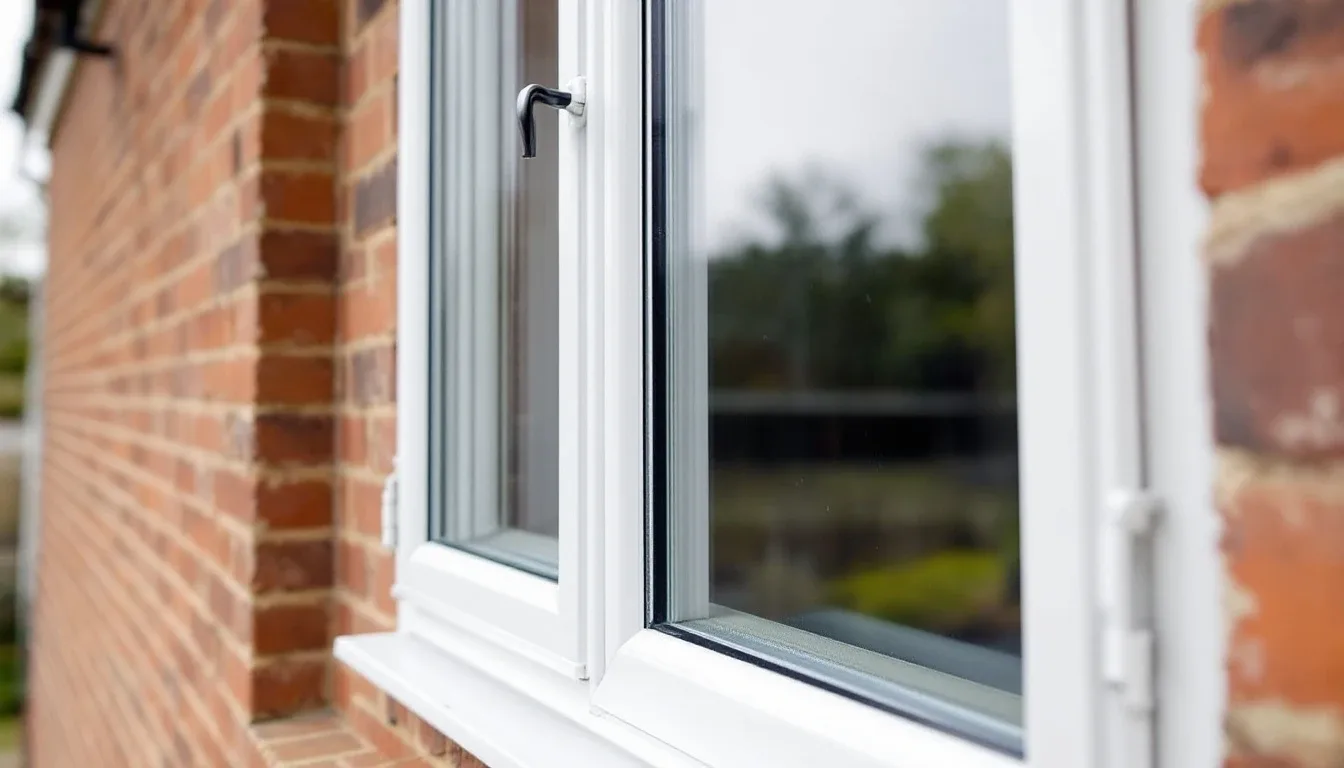
A newly fitted uPVC double-glazed window. uPVC accounts for around 75% of UK window replacements.
Contents
- Single window (uPVC casement, standard size)
- £450-£700 installed.
- Full house (8-12 windows)
- £4,000-£8,000 installed.
- Victorian sash window (uPVC)
- £800-£1,200 per window.
- VAT saving vs previous 5% rate
- Around £800-£1,600 on a typical full-house installation (0% VAT since February 2024).
How much does double glazing cost in Bristol?
Double glazed window prices in Bristol vary by size, material, and window type. Typical costs for supply and installation in 2026 are:
- Small casement window (600mm x 900mm): £300-£500 in uPVC, £500-£800 in timber
- Standard casement window (1200mm x 1200mm): £450-£700 in uPVC, £700-£1,100 in timber
- Large casement window (1800mm x 1500mm): £700-£1,200 in uPVC, £1,100-£1,800 in timber
- Victorian sash window (standard): £800-£1,200 in uPVC, £1,200-£1,500 in timber
- Bay window (3-panel): £1,800-£3,500 depending on size and material
A full house replacement for a typical 3-bedroom Bristol semi-detached property with 8-12 windows costs £4,000-£8,000 installed (Energy Saving Trust, May 20261). Victorian terraces with sash windows typically cost more, around £6,000-£12,000 for a full house due to more complex installation requirements.
Since February 2024, all double glazing installations on residential properties have been charged 0% VAT, which saves around £800-£1,600 on a typical full house installation compared to the previous 5% rate (HMRC Notice 708/6, updated April 20262).
What affects double glazing costs?
Several factors influence the final cost of double glazed windows:
Window material
- uPVC: Cheapest option, low maintenance, good thermal performance, available in limited colors (usually white, cream, grey, woodgrain effect). Typical lifespan: 20-25 years.
- Timber: More expensive, requires periodic maintenance (painting or staining every 5-8 years), better appearance in period properties, wider color choice. Typical lifespan: 30-60 years if maintained.
- Aluminium: Most expensive, slim sightlines, very durable, minimal maintenance. Typical lifespan: 45-60 years. Usually only specified for modern properties or where slim frames are required.
Glass specification
- A-rated double glazing: Most common specification. U-value around 1.4-1.6 W/m²K. Saves around 135 kWh per m² per year compared to single glazing (Energy Saving Trust, 20261).
- C-rated double glazing: Older or budget specification. U-value around 1.8-2.0 W/m²K. Still significantly better than single glazing (U-value 4.8-5.0 W/m²K) but less efficient than A-rated.
- Triple glazing: U-value around 0.8-1.0 W/m²K. Adds around 20-30% to window cost. Payback period is long in the UK climate (20+ years for the incremental improvement over A-rated double glazing).
- Low-emissivity (Low-E) glass: Microscopically thin coating that reflects heat back into the room. Standard on A-rated windows.
- Argon or krypton gas fill: Inert gas between panes improves insulation compared to air. Standard on most A-rated double glazing.
Window type and complexity
- Casement windows: Side-hung or top-hung opening panels. Most common modern window type. Simplest to install, lowest cost.
- Sash windows: Traditional sliding windows common in Victorian and Edwardian Bristol terraces. More complex mechanism, higher cost. Double glazed sash windows can use slim double glazed units (around 12-14mm total thickness) to maintain period appearance.
- Tilt-and-turn windows: Can open inward for cleaning. More expensive than standard casement due to more complex hardware.
- Bay windows: Projecting windows with multiple panels. Require structural lintel support and more complex installation, typically 50-80% more expensive than equivalent flat windows.
- Bespoke or non-standard sizes: Add 20-50% to standard window costs. Many Bristol Victorian properties have non-standard window sizes.
Installation complexity
- Scaffolding: Required for upper floors or difficult access. Adds £500-£1,500 to total project cost depending on duration and height.
- Structural work: If lintels need replacing or openings need adjusting, add £200-£800 per window.
- Cill and reveal work: Internal cills and reveals may need repairing or replacing. Budget £50-£150 per window for plasterwork and decoration.
- Disposal: Old window disposal usually included, but check quotes. Some installers charge separately for disposal of old timber sash windows (around £50-£100 per window).
Double glazing grants and 0% VAT rules
As of May 2026, grants for double glazing are limited. However, several schemes reduce the effective cost:
0% VAT on all installations
All double glazing installations on residential properties are zero-rated for VAT, saving around £800-£1,600 on a typical full house installation. This applies to all homes, regardless of income or existing window condition (HMRC Notice 708/6, April 20262).
ECO4 scheme (for eligible households)
The ECO4 scheme provides free or heavily subsidized energy efficiency measures, including double glazing, to households that meet eligibility criteria. You may qualify if:
- You receive certain benefits (e.g., Pension Credit, Universal Credit, Child Benefit, Income Support)
- Your property has single glazing or broken double glazing
- Your household is in fuel poverty or has a low Energy Performance Certificate (EPC) rating (D, E, F, or G)
ECO4 is administered through energy suppliers. Check eligibility at GOV.UK ECO page3 or contact Bristol City Council's energy advice team.
Bristol City Council schemes
Bristol City Council occasionally runs grant or loan schemes for low-income households or specific neighborhoods. Check the Bristol City Council energy advice page4 for current schemes.
Home Upgrade Grant (off-gas properties)
If your Bristol property is not connected to mains gas and has an EPC rating of D, E, F, or G, you may be eligible for funding through the Home Upgrade Grant. This covers insulation and heating measures, and may include windows in some cases. Check with Centre for Sustainable Energy5, which administers the scheme in the South West.
Planning permission and conservation areas in Bristol
Most double glazing replacements in Bristol do not require planning permission. However, there are important exceptions:
Conservation Areas
Bristol has 35 Conservation Areas, including Clifton, Cotham, Redland, Southville, and many areas of Bedminster and St George. In Conservation Areas:
- You usually need planning permission to replace windows on elevations facing a road or public footpath
- Replacement windows should match the original style, materials, and proportions
- Many Victorian and Edwardian properties require like-for-like sash window replacement (sash-to-sash, not sash-to-casement)
- uPVC windows are often not permitted on front elevations in Conservation Areas
Before replacing windows in a Bristol Conservation Area, check the Bristol City Council Conservation Areas page6 and contact the planning department. Unauthorized window replacement in a Conservation Area can result in enforcement action requiring reinstatement at your expense.
Listed Buildings
If your property is Listed (Grade I, II*, or II), you need Listed Building Consent to replace windows, even if you are replacing like-for-like. Bristol has around 2,400 Listed Buildings. Check whether your property is Listed using the Historic England National Heritage List7.
For Listed Buildings, Bristol City Council and Historic England usually require:
- Repair of original windows where possible, rather than replacement
- If replacement is necessary, use of traditional materials (timber, not uPVC)
- Slim double glazed units (12-14mm total thickness) or secondary glazing to maintain historic appearance
- Retention of original window furniture (handles, stays, shutters)
See Historic England's window guidance8 for detailed advice on Listed Buildings and period properties.
Article 4 Directions
Some Bristol Conservation Areas have Article 4 Directions, which remove certain permitted development rights. This means you may need planning permission even for rear or side elevations. Check with Bristol City Council planning before proceeding.
Finding FENSA-registered installers in Bristol
Only use a FENSA-registered installer or an installer registered with an equivalent Competent Person Scheme (CERTASS, BFRC). FENSA (Fenestration Self-Assessment Scheme) is the most common registration scheme for window and door installers in England and Wales (FENSA website9).
FENSA registration means:
- The installer meets Building Regulations standards for thermal performance, ventilation, and safety
- You receive a FENSA certificate after installation, which is required for Building Control compliance and may be needed when selling your property
- You have access to FENSA's complaints and insurance-backed guarantee schemes if something goes wrong
To find FENSA-registered installers in Bristol:
- Visit the FENSA installer search10 and enter your postcode.
- Get quotes from at least three installers. Ask for a breakdown of costs, window specifications (U-value, material, glass type), and warranty terms.
- Check reviews on Trustpilot, Checkatrade, or local community forums.
- Ask whether the quote includes scaffolding, disposal, internal finishing, and FENSA certification fees.
- Confirm the installer is still FENSA-registered at the time of installation (registration can lapse).
Be wary of installers offering "limited time" discounts or pressure to sign on the day. Reputable installers will give you time to compare quotes and check details. Never pay the full amount upfront; typical payment structures are 10% deposit, 40% on delivery, 50% on completion.
Is double glazing worth it?
Whether double glazing is worth the investment depends on your current windows, heating costs, and how long you plan to stay in the property.
Energy savings and payback
Replacing single glazing with A-rated double glazing saves around 135 kWh per m² of window per year (Energy Saving Trust, 20261). For a typical Bristol 3-bedroom house with 15m² of window area, that is around 2,025 kWh per year.
At May 2026 energy prices (around 25p/kWh for electricity, 6p/kWh for gas), annual savings are:
- Electric heating: £500-£550 per year
- Gas heating: £120-£150 per year
For a full house replacement costing £5,000, payback periods are:
- Electric heating: 9-10 years
- Gas heating: 33-40 years
If you have gas heating, double glazing is unlikely to pay back on energy savings alone within the typical 20-25 year lifespan of uPVC windows. However, double glazing provides other benefits:
- Comfort: Eliminates cold draughts and cold window surfaces, reducing condensation and mold risk
- Noise reduction: Double glazing reduces external noise by around 20-30 dB, particularly valuable in busy Bristol areas near main roads
- Security: Modern double glazed windows have multi-point locking systems and laminated or toughened glass, significantly improving security compared to old single glazed windows
- Property value: Double glazing is expected in the UK housing market. Lack of double glazing can reduce saleability and may lower property value by 5-10% in some cases
- Maintenance: New uPVC or timber windows require less maintenance than old, poorly fitting single glazed windows
When to prioritize double glazing
Double glazing should be a priority if:
- You currently have single glazing (typical in pre-1970s Bristol properties)
- Your existing double glazing is failing (misting between panes, broken seals, rotten frames)
- You have electric heating or plan to install a heat pump (heat pumps work most efficiently in well-insulated, airtight homes)
- You suffer from external noise issues
- Your windows are draughty, difficult to open/close, or insecure
When NOT to prioritize double glazing
If you have gas heating and existing double glazing in reasonable condition, other energy efficiency measures usually offer better payback:
- Loft insulation: 270mm loft insulation costs around £300-£500 and saves around £200-£300 per year (payback 1-2 years)
- Cavity wall insulation: Costs around £500-£1,000 and saves around £200-£350 per year (payback 2-4 years)
- Internal or external wall insulation: For solid wall properties (common in Bristol Victorian terraces), costs £4,000-£14,000 but saves around £400-£600 per year (payback 7-20 years)
The most cost-effective retrofit strategy is usually: loft insulation first, then cavity or solid wall insulation, then double glazing if you have single glazing or failing double glazing.
Frequently asked questions
How much does it cost to replace all windows in a Bristol house?
A full house window replacement in Bristol typically costs £4,000-£8,000 for a typical 3-bedroom semi-detached house with 8-12 windows. Victorian terraces with sash windows cost more, typically £6,000-£12,000 for the same number of openings due to more complex installation requirements. All installations have 0% VAT as of February 2024.
Are double glazed windows cheaper now due to 0% VAT?
Yes. Since February 2024, all double glazing installations on residential properties have been charged 0% VAT, which saves around £800-£1,600 on a typical full house installation compared to the previous 5% rate. This applies to all homes, not just those in fuel poverty or with low incomes.
Do I need planning permission for double glazing in Bristol Conservation Areas?
In Bristol Conservation Areas, you usually need planning permission to replace windows on elevations facing a road or public footpath. Many Victorian and Edwardian properties in Conservation Areas require like-for-like sash window replacement (sash-to-sash, not sash-to-casement). uPVC windows are often not permitted on front elevations. Check with Bristol City Council planning6 before replacing windows in a Conservation Area.
Can I get a grant for double glazing in Bristol?
Most Bristol homeowners cannot access grants for double glazing alone. However, if you receive certain benefits (Pension Credit, Universal Credit, Income Support) and have single glazing or broken double glazing, you may qualify for free or heavily subsidized windows under the ECO4 scheme. All installations have 0% VAT. Check the Bristol City Council energy advice page4 for local schemes.
Should I choose uPVC or timber double glazing for my Bristol Victorian terrace?
If your property is in a Conservation Area or is Listed, you will usually need timber windows to match the original style. uPVC windows are often refused planning permission on front elevations in Conservation Areas. If your property is not Listed or in a Conservation Area, uPVC is cheaper and lower maintenance, but timber has better longevity (30-60 years vs 20-25 years) and appearance if you are willing to maintain it.
What is the difference between A-rated and C-rated double glazing?
A-rated double glazing has a U-value of around 1.4-1.6 W/m²K, while C-rated has a U-value of around 1.8-2.0 W/m²K. Lower U-values mean better insulation. A-rated windows save around 10-15% more energy than C-rated windows. The cost difference is typically only £20-£50 per window, so A-rated is usually worth the small premium. All new windows should be at least C-rated to meet Building Regulations.
How long do double glazed windows last?
uPVC double glazed windows typically last 20-25 years before seals fail or frames degrade. Timber windows last 30-60 years if maintained (repainted or re-stained every 5-8 years). Aluminium windows last 45-60 years. The sealed double glazed units themselves typically last 15-25 years before seals fail and misting occurs between panes. Failed sealed units can be replaced without replacing the entire window, costing around £80-£150 per unit.
Can double glazing reduce noise from busy Bristol roads?
Yes. Standard double glazing reduces noise by around 20-30 dB, which is a noticeable improvement. For properties on very busy roads (e.g., A4, A38, A370), acoustic double glazing with laminated glass and asymmetric cavity widths can reduce noise by up to 40-45 dB. Acoustic glazing adds around 15-25% to window cost. Secondary glazing (installing a second window inside the existing window) is also very effective for noise reduction (30-40 dB reduction) and is often used in Listed Buildings where external window replacement is not permitted.
Sources
- Energy Saving Trust. energysavingtrust.org.uk/advice/windows-and-doors/ (accessed 3 July 2026)
- GOV.UK. www.gov.uk/guidance/vat-on-energy-saving-materials-and-heating-equi... (accessed 3 July 2026)
- GOV.UK. www.gov.uk/energy-company-obligation (accessed 3 July 2026)
- Bristol City Council. www.bristol.gov.uk/residents/housing/housing-energy-advice (accessed 3 July 2026)
- Cse. www.cse.org.uk/projects/view/1336 (accessed 3 July 2026)
- Bristol City Council. www.bristol.gov.uk/residents/planning-and-building-regulations/cons... (accessed 3 July 2026)
- Historic England. historicengland.org.uk/listing/the-list/ (accessed 3 July 2026)
- Historic England. historicengland.org.uk/advice/technical-advice/energy-efficiency-an... (accessed 3 July 2026)
- Fensa. www.fensa.org.uk/ (accessed 3 July 2026)
- Fensa. www.fensa.org.uk/find-an-installer (accessed 3 July 2026)